
ABLE CARE
Digital Fall Risk Screening Tool with Grip Strength
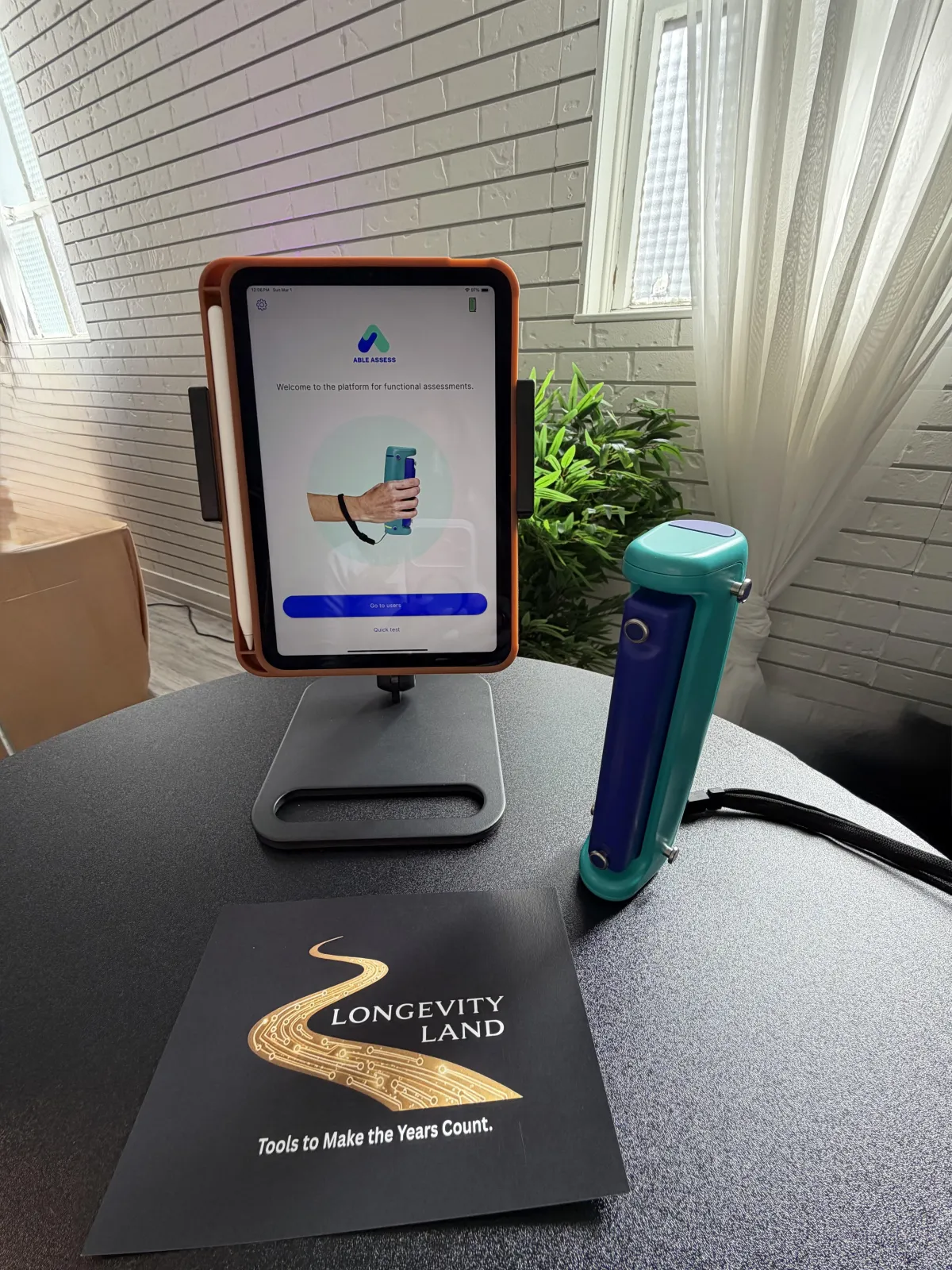
Able Assess by Able Care is a sensor + app designed to measure grip strength, identify fall risk, and monitor functional changes over time.
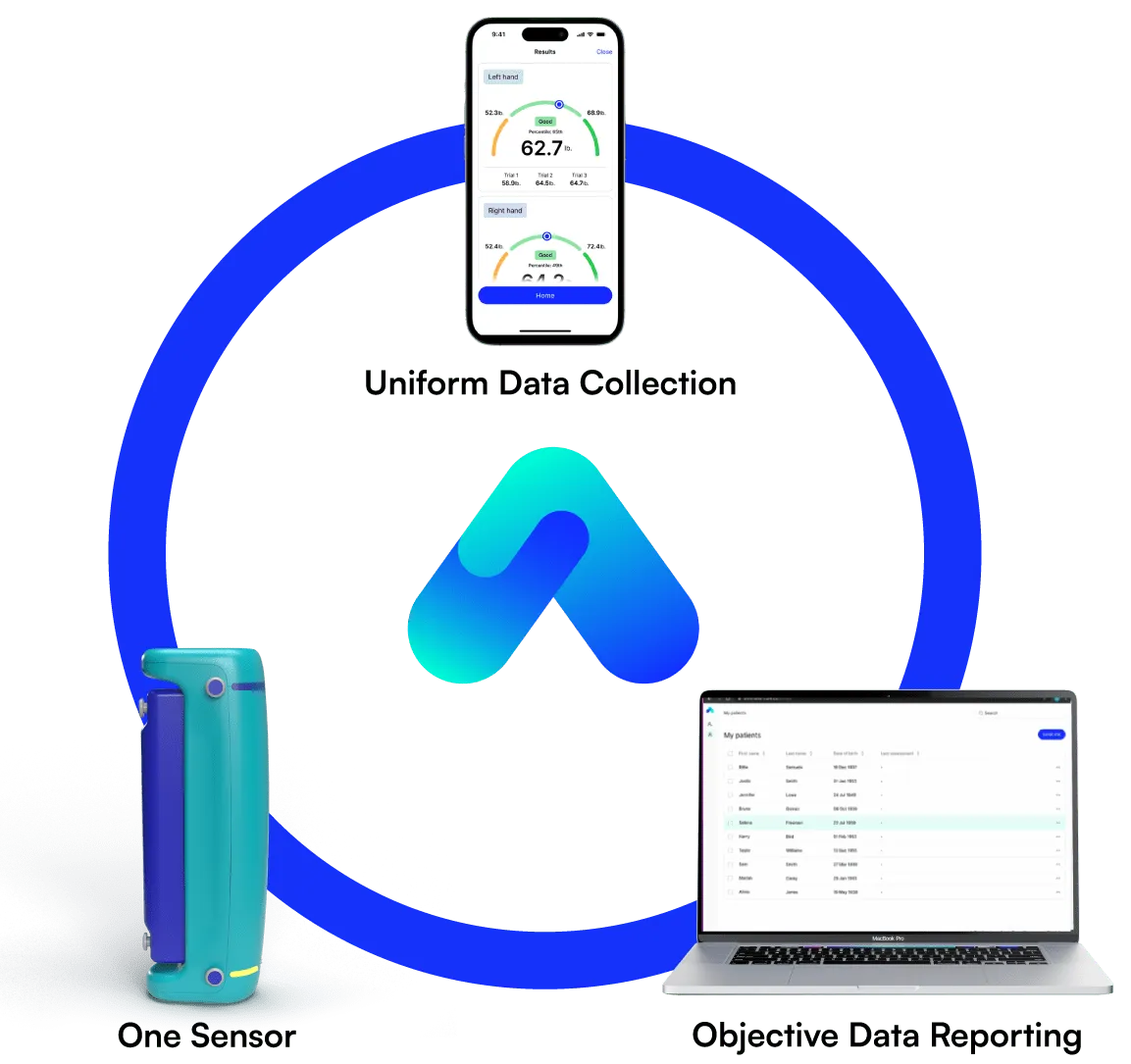
Able ASSESS
Able Assess is a plug-and-play falls screening solution.
It consists of a GripAble sensor, an app to conduct the fall risk screening, and objective data reporting.
With 1 sensor, 4 core assessments are digitally completed:
-Grip Strength
-Gait Speed (4-Meter Walk Test)
-Balance (Timed Up and Go - TUG)
-Lower Limb Strength (Sit-to-Stand Test - STS)
The Problem it Addresses
Falls and functional decline are significant concerns in both aging populations and rehabilitation settings. However, early indicators of risk—such as reduced grip strength—are often underutilized or inconsistently measured in practice.
Without structured systems in place, important indicators may be overlooked, limiting the ability to intervene early or monitor meaningful progress.
Able Assess addresses these challenges by providing a digital platform that supports quick, consistent fall risk screening and integrates it into a broader assessment workflow. This helps clinicians better identify potential fall risks and monitor functional changes in a more structured and reliable way.
Designed For:
Clinicians assessing fall risk and mobility
Occupational and physical therapists
Rehabilitation and recovery programs
Active aging care providers
Wellness and longevity-focused clinics
Community and home care services
Performance and functional assessment specialists
The platform is suited for environments where grip strength and fall risk metrics are used to inform care decisions, monitor progress, and support long-term health outcomes.
Why it Matters
Grip strength is increasingly recognized as a simple yet powerful indicator of overall health, functional ability, and longevity. Research has linked lower grip strength to increased risk of mobility limitations, frailty, and falls.
Falls remain one of the leading causes of injury and loss of independence, particularly among older adults. Early identification of risk factors plays a critical role in prevention and long-term health outcomes.
In performance and rehabilitation settings, this type of data can also support return-to-function strategies and help guide individualized programs.
Take the Next Step
Click here to explore how Able Assess can support digital grip strength assessment and fall risk monitoring for your practice.
Use code LLFREESENSOR for 1 free GripAble sensor!
*Some partnerships may include a referral relationship. Each technology is thoughtfully selected, but inclusion does not imply endorsement.
[View Details]
The Longevity Land Lens
Looking Beyond the Product
Clinical
Insight

Use the same device for repeat grip strength testing as normative values are tool-specific, and consistency is what makes the data meaningful.


Supported by product-specific clinical
research demonstrating measurable
outcomes.
Able Assess is FDA registered and backed by rigorous research. The 3 falls risk test offered are part of the CDC STEADI recommendations. The grip strength assessment is backed by peer-reviewed studies.
Where we see this fitting best:
Senior living → routine wellness and fall risk screenings
Rehabilitation → objective tracking for Grip Strength, TUG, Gait Speed, and Chair Stand
Fitness → baseline + progress monitoring
Community events → simple, high-impact awareness tool
What stands out:
Goes beyond grip strength → sensor-based insights that contribute to a broader fall risk profile
Clear, guided assessment process (easy to administer, easy to understand)
Clean, actionable reporting that translates data into meaningful next steps
Why this matters:
Falls are costly and can be devastating for older adults. Intervening early with measurable data supports a prevention-focused approach to healthcare and value-based care. For longevity insights, grip strength is being proposed as a new vital sign of health and is emerging as a new standard to screen.
What to consider:
1. Able Care uses its own device-specific normative data, which differs from traditional tools like the Jamar dynamometer. For consistency and accurate tracking over time, it’s important to use the same device for repeat measurements rather than comparing across tools.
2. It’s a starting point, not a full assessment
3. Most valuable when paired with a next step (training, therapy, program)
Feedback from the field
"Big results come from little changes. See the progress."
"Less weight. More movement. Better positioning."
The Path Forward
Function | Longevity | Purpose

What matters most is what that strength and balance allows someone to do.
Grip strength shows up in the moments that give life meaning—opening a jar while cooking for a family gathering, carrying groceries with confidence, steadying yourself when you trip, or holding a grandchild’s hand. These are the everyday actions that reflect true independence.
Research continues to support this connection. A recent study in Springer highlights how lower grip strength is strongly associated with increased risk of adverse health outcomes and mortality, reinforcing its value as an early indicator.
→ Explore the research
Bottom line:
A simple experience on the surface—but a powerful tool for identifying risk, guiding next steps, and helping people maintain the strength and confidence to keep doing what matters most.



Longevity Land offers wellness insights and educational content to support informed decision-making
and does not provide medical advice, diagnosis, or treatment. Products and services featured are offered
by independent third parties. Longevity Land may receive a referral fee from certain partners; inclusion
does not constitute endorsement.
© 2026 Longevity Land by 10Eleven Life, LLC. All rights reserved.